We hear some version of this constantly.
But are we so sure?
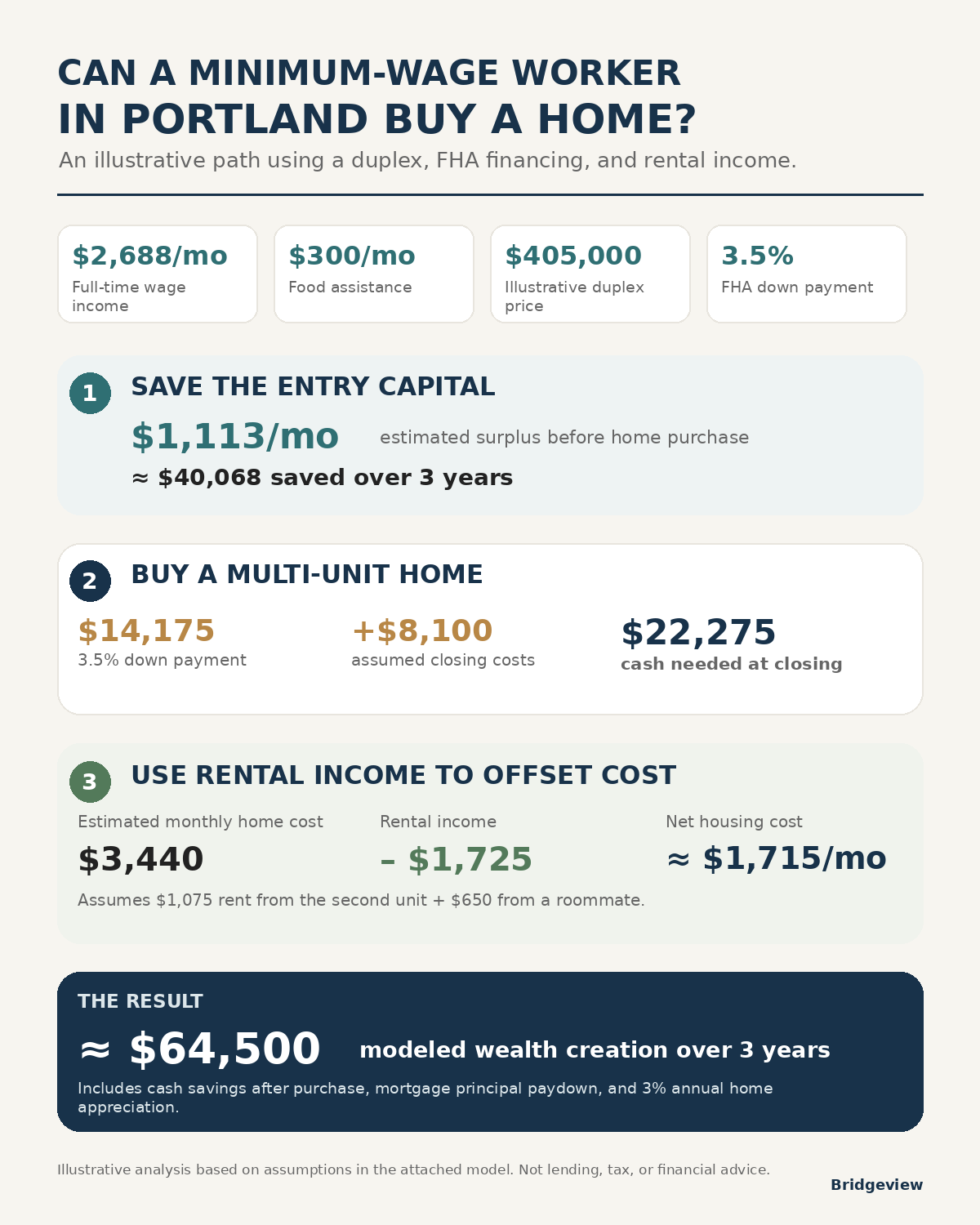
I decided to model what homeownership might look like for someone starting about as far down the income ladder as possible:
A single person working full-time at minimum wage in Portland, Oregon.
The assumptions:
They share a modest 2-bedroom apartment with a roommate and receive SNAP benefits if eligible.
They maintain a modest but achievable budget.
They save consistently for three years.
Instead of buying a traditional single-family home, they purchase a duplex using low-down-payment financing and rent the second unit.
The purchase price is based on actual duplex pricing in Portland.
Is this a perfect analysis? Of course not.
Life isn't a spreadsheet. Unexpected expenses happen. Financing qualifications matter. Individual circumstances vary.
But I think the exercise demonstrates something important:
The pathway to homeownership may be difficult, but it's not impossible — even for someone earning minimum wage in an expensive city.
We spend an enormous amount of time telling young and lower-income people that homeownership is hopeless.
What if we spent some of that energy teaching them how it could be possible?
Your first home won't be your dream home.
Maybe we should stop telling an entire generation they can't afford to own a home — and start showing them the different paths that might get them there.